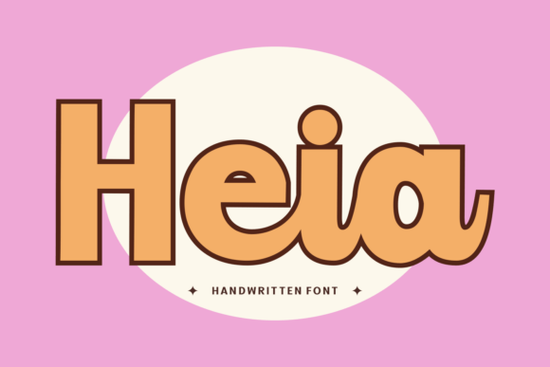
When you need a typeface that balances delicate curves with clear readability, Heia Font offers a reliable solution for crafters and designers. It brings a soft, handwritten feel to your layouts without sacrificing the clean structure needed for printing. Whether you are cutting vinyl for seasonal gifts or designing digital templates for small shops, this script typeface helps you add a personal touch quickly.
What kind of projects work best with a soft script typeface?
Designers and hobbyists usually reach for flowing letterforms when they want their work to feel warm and approachable. This style fits naturally into wedding stationery suites, where guests expect a quiet sense of romance. It also performs well for handmade baby announcements, event posters, and boutique packaging. If you run a print-on-demand store, you can layer it over simple graphics for tote bags. For hands-on makers, it cuts cleanly on electronic machines because the strokes stay defined at smaller sizes. You can explore similar layout approaches in this handpicked collection for weekend creators to see how spacing changes the final look.
How does the built-in character flow improve your daily workflow?
One of the most time-saving features is how the letters connect. Traditional scripts often require manual kerning to avoid awkward gaps. This typeface includes smart ligatures that let adjacent characters join smoothly. You get that classic cursive look right after you type, saving hours during client revisions. The strokes maintain a steady weight, making it easier to read on signs or menu boards. If you are building a minimalist brand identity, the clean edges keep your design from looking cluttered. Pairing this with straightforward sans-serif faces helps balance the page, much like how makers experiment with type in the nature-inspired typography gallery. Many shop owners also compare this to Sweet Friday Thing when deciding between bolder strokes and lighter styles.
Which design elements highlight seasonal and rustic qualities?
Many creators use flowing scripts to mark autumn harvest events, spring bookings, or winter cards. The gentle taper of each stroke gives the text a slightly rustic charm, especially when printed on kraft cardstock. You can experiment with seasonal palettes like muted sage greens or soft pastels to match your theme. For cake toppers and edible prints, keep the letter size larger so the details stay crisp. Leave generous margins around the words so elegant loops do not bump into borders. Review how other designers manage white space in the vintage-style layout archive before finalizing files. You can also verify commercial terms on the official product showcase page.
How do you choose the right companion fonts for display projects?
Strong display typography relies on contrast. A sweeping headline needs a grounded subheading. Match your primary script with a clean geometric sans-serif or a sturdy slab for body paragraphs. Avoid using too many decorative faces in one layout, or the design will compete for attention. If you are drafting a brochure, use the flowing script only for titles. Keep main text simple and left-aligned for better readability on screens and print. Test combinations alongside the heritage-inspired pairing suggestions and compare them with Organic Grain to find balance. For heavier feels, some look at Nebraska Bridge, while those wanting rougher textures might check Rustic Grunge.
What should you check before sending files to print or cut?
Working with script lettering does not mean guessing at spacing. Start by downloading the file, install it in your folder, and restart your software before testing phrases at different sizes. Print a proof before sending to a cutter or bulk order. Adjust line height only if loops touch, and keep your color palette simple to let the typography carry the focus. Save a PDF/X version for commercial printers and keep an editable source file for future revisions.
Quick steps before publishing your next design
- Test scale first: Type your main phrase at 24pt, 36pt, and 48pt to see how the curves behave at real sizes.
- Check contrast carefully: Use a dark background with light text, or vice versa, to keep the flowing edges visible from a distance.
- Limit decorative layers: Stick to one main script per project and pair it with a plain typeface for details.
- Export correctly for your medium: Convert text to outlines only when sending to a cutter or engraver, otherwise keep it fully editable.
- Proofread backward: Scripts with connected letters can sometimes hide spelling mistakes, so read your copy in reverse before printing.
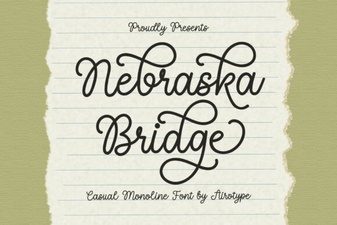 The Nebraska Bridge Font for Modern Design
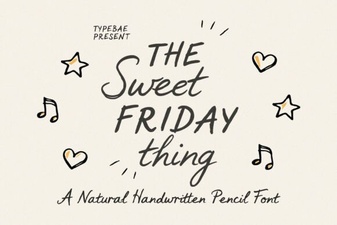 Sweet Friday Font: Download & Creative Uses
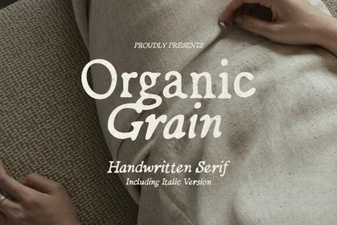 Organic Grain Fonts for Authentic & Creative Projects
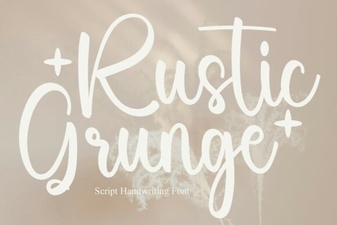 Creative Projects with Rustic Grunge Fonts
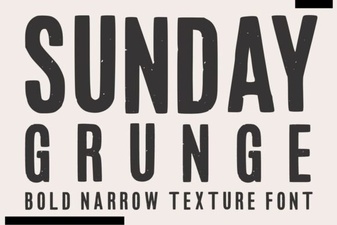 Sunday Grunge Fonts for Creative Designs
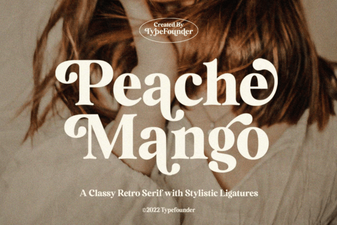 Peache Mango Font: Creative Design Projects