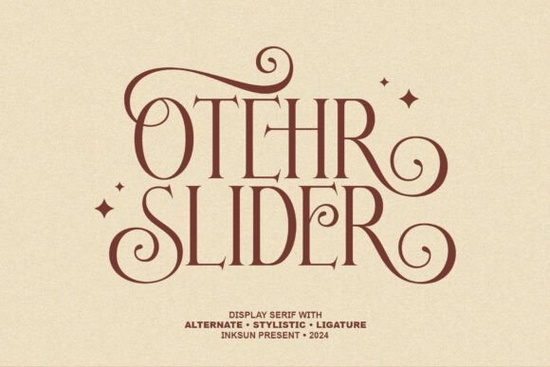
When you need a typeface that balances vintage charm with modern readability, Other Slider Font gives you a practical solution for visual projects that require both elegance and personality. It is a display serif built for high-contrast strokes and smooth, sophisticated curves, making it a reliable choice for designers who want their typography to stand out without feeling overly heavy. Crafters, print-on-demand sellers, and small brand owners often look for this specific mix of classic structure and whimsical detail when working on packaging, posters, or digital headers.
What makes this display serif work well for vintage-inspired projects?
The standout feature here is how the letterforms move. High-contrast strokes create a natural rhythm across the page, while the elaborate swashes and fluid ligatures add a hand-drawn quality that feels both retro and current. You will also notice small star-shaped decorative accents integrated into certain characters. These details do not distract from the reading flow. Instead, they give quotes, logos, and short titles a subtle dreamy edge that catches the eye on printed merchandise or social media graphics.
Unlike heavy block serifs that can overwhelm smaller layouts, this typeface keeps its structural foundation clean. The uppercase and lowercase sets are carefully balanced, so body text remains legible even when used in slightly reduced sizes. Full multilingual support means you can confidently design for international audiences without swapping out fonts or manually inserting special characters mid-project.
Which creative projects benefit most from this typeface?
If you sell custom mugs, tote bags, or journal covers, display serifs like this one tend to perform well on products that rely on short, impactful phrases. Editorial layouts, magazine headers, and photography watermarks also gain a polished look when paired with this style. Small businesses frequently use it for branding kits and product labels because the decorative elements read clearly at medium to large scales.
For hobbyists working on personal quote prints or event invitations, the star accents and flowing connections add just enough character to feel custom-made. You can see how similar display options handle different spacing requirements by exploring this alternative serif collection, which shares a similar focus on vintage character and practical layout use.
How should I pair it with simpler fonts for daily work?
Because the main lettering carries strong decorative features, it works best when paired with a clean, neutral sans serif or a straightforward monospace font for secondary text. Keep the display typeface strictly for headings, logos, or pull quotes, and let the supporting font handle longer descriptions, ingredients lists, or pricing details. This contrast keeps your designs readable and prevents the layout from feeling cluttered.
What file formats are included, and how do they affect my workflow?
The download package comes with OpenType (OTF), TrueType (TTF), and WOFF files. OTF and TTF cover most desktop design software like Canva, Adobe Illustrator, Affinity Publisher, and Procreate. WOFF is optimized specifically for websites, so you can embed it directly into custom blog headers or digital storefronts without causing heavy page loads.
You also get complete uppercase and lowercase sets, numerals, punctuation marks, and functional glyphs. If you want to compare how this exact package handles different software environments or review licensing terms, the resource page for this specific typeface provides clear technical breakdowns. You can also explore related options by searching for Other Slider on the main marketplace.
How do I use decorative ligatures without overcomplicating my design?
Ligatures and swashes are powerful tools, but they require careful spacing and sizing adjustments to look professional. Start by typing your phrase in standard casing to see how the connecting strokes interact. Enable stylistic sets in your design program if the software supports OpenType features. If the decorative tails overlap adjacent letters, increase the tracking slightly or shorten your headline by one or two characters.
Always preview your typography at the actual print or screen size before finalizing. What looks balanced on a large desktop monitor can appear cramped on a mobile screen or a 5-inch product label. Test your layout in black and white first to ensure contrast and spacing hold up before introducing brand colors or background textures.
Quick checklist for getting started
- Install all three file types (OTF, TTF, WOFF) so you have ready options for desktop editing, print exports, and web publishing.
- Test ligature behavior in your preferred software by enabling OpenType features before locking in any layout decisions.
- Limit decorative swashes to titles, logos, or short quotes to maintain strong readability across different platforms.
- Pair with a neutral supporting font for body text, product descriptions, or pricing labels to keep visual hierarchy intact.
- Print a small-scale proof to check how the star accents and high-contrast strokes hold up at reduced sizes.
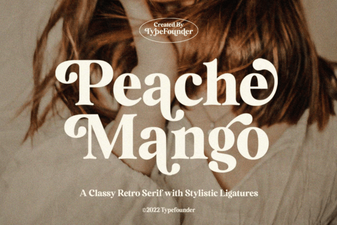 Peache Mango Font: Creative Design Projects
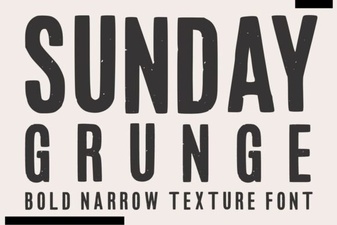 Sunday Grunge Fonts for Creative Designs
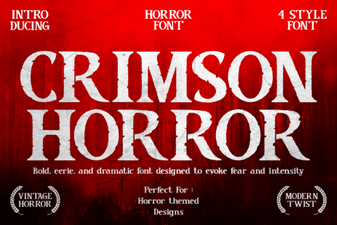 Craft with Crimson Horror Font: Design Ideas
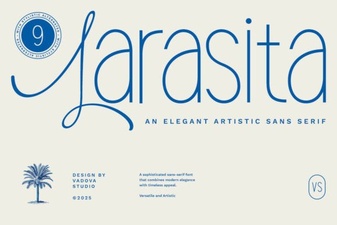 Larasita Font: Modern Elegance for Digital Projects
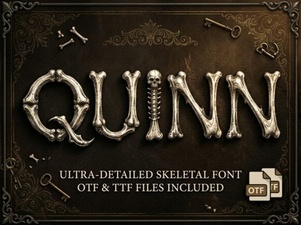 Quinn Font: Creative Typography for Your Projects
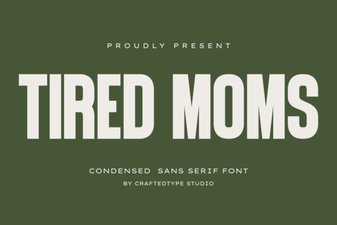 Typography for Tired Moms: Font Design & Practical Projects